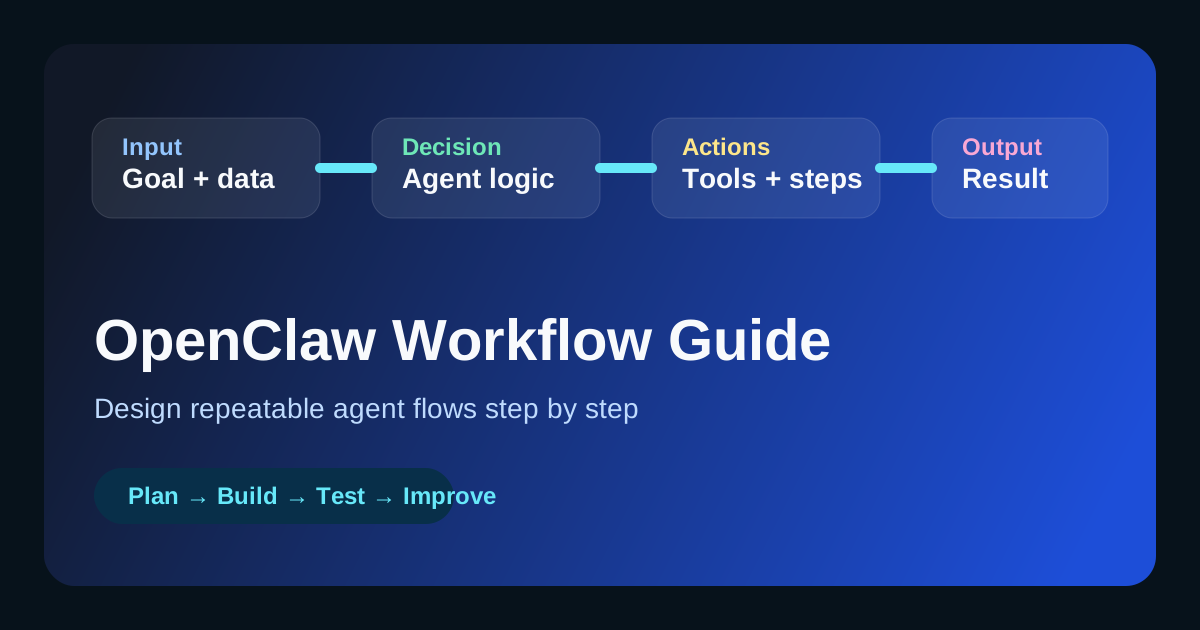
How to Build an AI SEO Agent (OpenClaw Guide)
Learn how to build an AI SEO agent with OpenClaw to plan keywords, create briefs, draft articles, improve on-page SEO, and track performance with GSC and GA.
Introduction
If you already connected Google Search Console and Google Analytics, the next logical step is building a repeatable content workflow. An AI SEO agent can help you turn keyword ideas into briefs, outlines, drafts, internal links, and update plans instead of starting from a blank page every time.
In this guide, you'll learn how to build an AI SEO agent with OpenClaw and how to use it to create higher-quality SEO articles without publishing thin AI content.
What an AI SEO Agent Should Actually Do
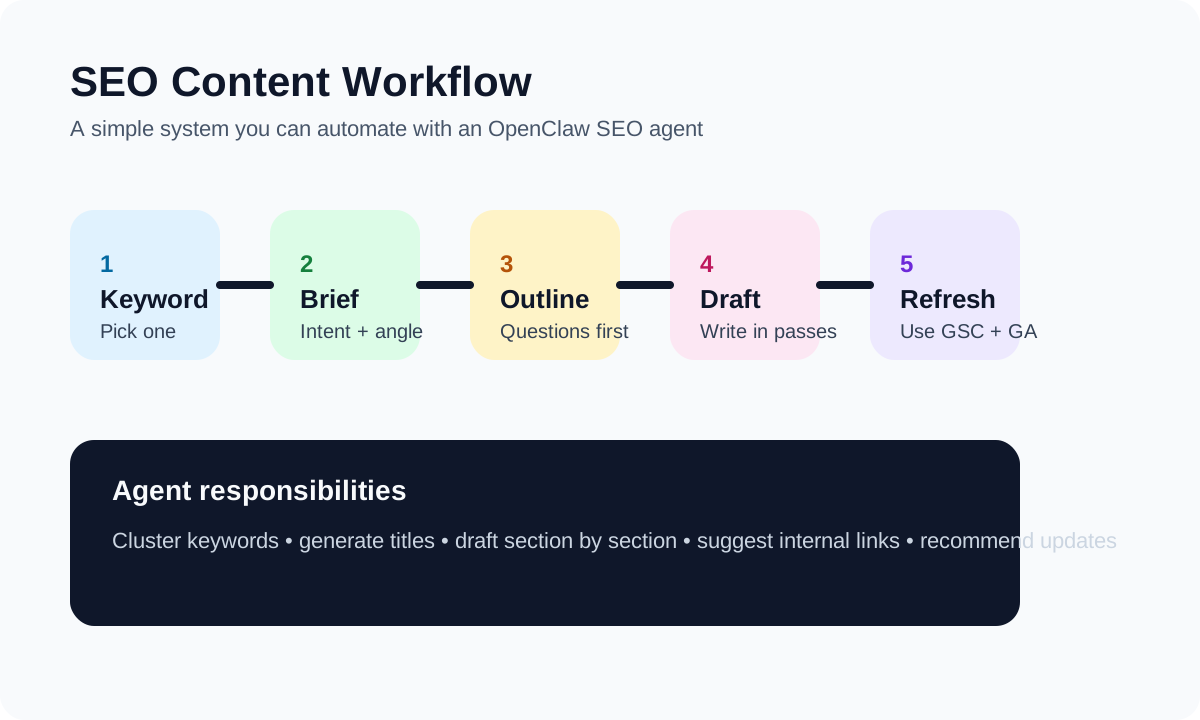
Most people think an SEO agent should "write articles." That is too narrow. A useful SEO agent should support the full workflow:
- Collect keyword ideas and cluster them by search intent
- Turn one keyword into a clear article brief
- Suggest titles and headings based on the target query
- Draft the first version of the article
- Improve internal linking and FAQ coverage
- Create a refresh checklist after the post is published
That means the real output is not just text. It is a content system.
When to Use an AI SEO Agent
An AI SEO agent is especially helpful when you:
- Publish content on a niche site consistently
- Need to cover many long-tail keywords
- Want a standard format across posts
- Need help turning analytics into content decisions
- Want faster drafts without losing editorial control
It works best when a human still reviews strategy, examples, claims, and final formatting.
Recommended SEO Content Workflow
Here is a practical workflow you can use every time:
Step 1: Pick One Primary Keyword
Start with one keyword, not five. Your article needs a clear target.
Good keyword signals:
- Specific wording
- Clear intent
- Low or medium competition
- Strong relevance to your product or niche
Examples for an OpenClaw site:
OpenClaw CLIOpenClaw configAI SEO agentOpenClaw workflow
Step 2: Define Search Intent
Before writing anything, answer this question:
What does the searcher want to accomplish?
Common intent types:
- Informational: learn something
- Commercial: compare tools or options
- Transactional: start, buy, install, or sign up
If the keyword is AI SEO agent, the searcher usually wants:
- A definition
- A practical workflow
- A setup tutorial
- Examples of tasks the agent should handle
Step 3: Create a Brief Before Drafting
This is where many AI articles fail. They skip the brief and jump into writing.
Your brief should include:
- Primary keyword
- 3 to 6 secondary keywords
- Search intent
- Target audience
- Article angle
- Required sections
- Internal links to include
- CTA or next action
For example:
| Brief Item | Example |
|---|---|
| Primary keyword | AI SEO agent |
| Audience | marketers, founders, solo builders |
| Intent | informational |
| Angle | build a repeatable SEO workflow with OpenClaw |
| Internal links | What Is OpenClaw?, Build Your First AI Agent, Best OpenClaw Tools for Beginners |
Step 4: Generate 10 to 20 Titles
Do not use the first title AI gives you.
Ask for multiple title styles:
- Beginner guide
- Step-by-step tutorial
- Comparison-driven
- Outcome-driven
- Mistake-avoidance
Examples:
- How to Build an AI SEO Agent (OpenClaw Guide)
- AI SEO Agent Workflow: From Keyword Research to Publishing
- Build an AI SEO Agent That Creates Better Content Briefs
- AI SEO Agent for Beginners: Plan, Write, and Improve Content Faster
Choose the title that is:
- Clear before clever
- Closest to the query
- Easy to scan in search results
- Strong enough to support the actual article
Step 5: Build the Outline Around Questions
A strong outline usually beats a strong prompt.
For SEO articles, use sections that answer real follow-up questions:
- What is it?
- Why does it matter?
- How does it work?
- What is the workflow?
- What tools or setup are needed?
- What mistakes should be avoided?
- What should the reader do next?
Step 6: Draft Fast, Edit Hard
Use AI for the first draft, but review:
- Unsupported claims
- Generic examples
- Repetition
- Weak transitions
- Missing internal links
- Missing product relevance
The human editor should add:
- Real examples
- Product-specific instructions
- Screenshots or code snippets
- Contrarian insights
- Short summaries after dense sections
Step 7: Publish, Measure, Refresh
After publishing, check:
- Impressions in GSC
- CTR by query and page title
- Engagement in GA
- Queries that generate impressions but are missing from the article
This is where the second version of the article usually wins.
How to Make AI Write Higher-Quality SEO Content
The main rule is simple: AI should follow a system, not improvise the whole article.
Use this structure:
- Give AI the keyword and search intent
- Give it a detailed brief
- Ask for title options
- Ask for a structured outline
- Draft section by section
- Run an editing pass for clarity, originality, and on-page SEO
Bad Prompt
Write an SEO article about AI SEO agents.
Better Prompt
Write a beginner-friendly SEO article targeting the keyword "AI SEO agent".

Requirements:
- Search intent: informational
- Audience: founders, marketers, and solo creators
- Angle: explain how to build a repeatable SEO workflow with OpenClaw
- Include: definition, workflow, title creation, outlining, formatting, common mistakes, FAQ
- Tone: practical, clear, not fluffy
- Add internal links to OpenClaw setup and beginner tutorials
- Avoid unsupported claims and generic filler
- Use short paragraphs, lists, tables, and examples where helpful
Best Practice: Split the Writing Into Passes
A reliable workflow is:
- Research pass: collect ideas, questions, and intent
- Outline pass: define sections and key points
- Draft pass: write section by section
- SEO pass: refine title, description, headings, links, FAQ
- Human edit pass: remove fluff, add expertise, check accuracy
Title Formula You Can Reuse
If you do not know how to pick titles, start with formulas:
How to [Achieve Outcome] with [Tool][Keyword]: Complete Beginner Guide[Keyword] Workflow: Step-by-Step GuideCommon [Keyword] Mistakes and Fixes[Keyword] vs [Alternative]: Which One Is Better?
For your site, titles should usually:
- Start with the keyword or keep it near the front
- Stay under about 60 characters when possible
- Promise one clear outcome
- Match the article type exactly
How to Structure the Body
Use this body structure for most informational SEO posts:
1. Introduction
In 2 to 4 short paragraphs:
- Confirm the problem
- State who the article is for
- Explain what the reader will get
2. Quick Answer
Give a short direct answer early. This improves clarity and can help with featured snippets.
3. Core Sections
Use H2 sections for major questions and H3 sections for sub-steps.
A strong default structure:
- Definition
- Benefits
- Step-by-step workflow
- Examples
- Mistakes
- Tools or templates
- FAQ
- Conclusion
4. FAQ
Add 3 to 5 real questions people ask before they convert or continue reading.
5. Conclusion
End with a simple next step:
- install OpenClaw
- build the first agent
- create a content brief
- publish one article and measure results
Formatting Rules That Help SEO and Readability
Good formatting improves both user experience and editing speed.
Use these rules:
- Keep paragraphs short
- Use one idea per paragraph
- Add bullet lists for steps and checklists
- Use tables when comparing options
- Use code blocks for prompts or commands
- Use descriptive subheadings instead of vague labels
Avoid:
- Giant text walls
- Five H2s with the same meaning
- Repeating the exact keyword unnaturally
- Intro paragraphs that say nothing concrete
A Simple OpenClaw SEO Agent Setup
If you want to automate this workflow, your agent should combine a few capabilities.
Start with the basics from our installation guide and first agent tutorial, then give your SEO agent these responsibilities:
Suggested Capabilities
- keyword clustering
- title generation
- content brief creation
- article drafting
- internal link suggestions
- refresh recommendations
Example Agent Configuration
name: SEO Content Agent
description: Plans, drafts, and improves SEO articles

personality:
  analytical: true
  concise: true
  practical: true

capabilities:
  - web_search
  - summarization
  - file_write
  - text_processing

instructions: |
  You are an SEO content agent.
  Your job is to:
  1. Identify the search intent behind the keyword
  2. Create a content brief before drafting
  3. Generate 10 title options
  4. Produce a clear outline with H2 and H3 headings
  5. Write a useful first draft without filler
  6. Suggest internal links and FAQ questions
  7. Recommend post-publication updates using GSC and GA signals
If you are still learning tools, review Best OpenClaw Tools for Beginners first and keep the first version simple.
Common Mistakes to Avoid
These mistakes are why many AI SEO articles never rank:
- Targeting too many keywords in one post
- Writing before clarifying intent
- Choosing vague titles
- Publishing unedited AI drafts
- Ignoring internal links
- Forgetting to update articles after impressions appear in GSC
The fix is not "more AI." The fix is a better workflow.
Practical Plan for Beginners
If you are new to SEO, use this 7-day plan:
Day 1
Pick one keyword and one search intent.
Day 2
Create a brief with audience, angle, sections, and internal links.
Day 3
Generate 15 title options and choose the clearest one.
Day 4
Create a detailed outline with H2 and H3 headings.
Day 5
Draft the article section by section.
Day 6
Edit for clarity, examples, formatting, and links.
Day 7
Publish the article and annotate the date so you can review GSC and GA data later.
FAQ
Can AI write SEO articles by itself?
AI can produce a draft by itself, but quality usually improves when a human sets the brief, edits claims, adds examples, and checks formatting.
Should I stuff the keyword everywhere?
No. Use the keyword naturally in the title, description, H1, some headings, and a few body sections. Focus more on complete topic coverage than repetition.
How long should an SEO article be?
It depends on the query. Write long enough to satisfy intent completely. Some topics need 1,200 words. Others need 2,500 words plus examples.
What should I check after publishing?
Check impressions, CTR, and query coverage in Google Search Console, then compare engagement signals in Google Analytics.
Conclusion
The best SEO articles do not come from one perfect prompt. They come from a repeatable workflow: keyword selection, intent definition, brief creation, title testing, structured drafting, human editing, and post-publication refreshes.
If you want to build that workflow into your stack, start by installing OpenClaw, create a simple SEO content agent, and publish one tightly focused article before scaling up.
OpenClaw Security & Deployment Brief
Get the weekly OpenClaw Security & Deployment Brief — malicious skill alerts, CVE breakdowns, cost optimization tips.