What Is OpenClaw? The Personal AI Agent Runtime (2026)
OpenClaw is a free, open-source AI assistant that runs on your own machine and answers in WhatsApp, Telegram, and Discord. How it works and what it costs.

Introduction
OpenClaw is a free, open-source AI assistant that runs on your hardware and meets you in the chat apps you already use. Unlike ChatGPT or Claude, which live in someone else's cloud, OpenClaw is a runtime you install on your Mac, home server, or a small VPS — and unlike developer frameworks such as LangChain or CrewAI, it's not a toolkit for writing agent code. It's a finished product: install it, connect your messaging apps, pick a model, and you have a personal AI assistant that can hold conversations, remember context, run tools, and act on tasks around the clock.
It's also one of the fastest-growing open-source projects ever — roughly 389,000 stars on GitHub as of September 2026, created by developer Peter Steinberger and now stewarded by the OpenClaw Foundation under the MIT license. This guide explains what OpenClaw actually is, how it works, what it costs, and whether it's for you. If you already know you want it, our installation guide gets you running in minutes.
What OpenClaw Actually Does
OpenClaw connects four things into one system:
- A Gateway — the local control plane that ties everything together: sessions, tools, events, and channel connections. It runs on your machine and stays under your control.
- Messaging channels — WhatsApp, Telegram, Slack, Discord, Google Chat, Signal, iMessage, and others. Your assistant lives where your conversations already are, on your phone.
- Model providers — hosted models (an existing ChatGPT or Claude subscription, API keys, or aggregators like OpenRouter) or free local models via Ollama. OpenClaw 2.0 made setup detect what you already have and use it.
- Tools, skills, and plugins — the ability to act: run commands, read and write files, browse the web, and extend itself with community skills from the ClawHub marketplace (10,000+ and counting — see our vetted picks).
The result looks like this: you message your agent on Telegram asking it to summarize a report, cross-reference your calendar, draft a reply to an email, or watch a server overnight — and it does the work with the model, tools, and memory you configured, on infrastructure you own.
How It Works Under the Hood
Understanding three concepts makes everything else about OpenClaw click:
The Gateway. Everything runs through a single Gateway process — the brain stem of the system. Channels connect to it, model providers serve it, the CLI, terminal UI, and the 2.0 browser app all attach to it. Because every client talks to the same Gateway, your agent's state is consistent whether you're typing in a terminal or from WhatsApp.
Sessions. Every conversation is a session with persistent context. Since OpenClaw 2.0, sessions live in SQLite — durable, snapshot-able state that survives restarts and enables features like shared cloud sessions, where a teammate can join an ongoing task with full context intact.
Skills and sandboxing. Skills extend what the agent can do. By default, tools execute on the host machine — which is why anyone serious about running OpenClaw configures sandboxing and follows a security checklist. OpenClaw is powerful enough that securing it is part of owning it.
What OpenClaw Costs
The software is free — MIT-licensed, no premium tier. Your real costs are:
- The model. Zero extra if OpenClaw uses a subscription you already pay for; a few dollars to tens of dollars monthly on API billing; zero cash (more hardware) with local models. Full math in our cost breakdown.
- Hosting. Zero on your own computer; about $6/month for a small VPS that keeps your agent online 24/7 — the standard setup for a serious personal assistant (our VPS comparison tested the main options).
Most operators land between $6 and $25 per month all-in. There's no per-seat fee, no metering by the project, and no account required.
OpenClaw vs. the Alternatives
vs. ChatGPT/Claude: Those are cloud services — powerful, but someone else's server, someone else's data policy, and no ability to act on your files, your channels, or your schedule. OpenClaw inverts that: local runtime, your model choice, your data.
vs. agent frameworks (LangChain, CrewAI, AutoGPT): Those are toolkits for developers writing custom agent code. OpenClaw is the finished assistant — you configure rather than program. If your goal is "an AI assistant in my pocket," OpenClaw is the shorter path; if your goal is "a bespoke agent pipeline in my product," a framework fits better. We compare OpenClaw and CrewAI in detail here.
vs. Siri/Alexa: Voice assistants answer simple queries through locked-down ecosystems. OpenClaw is a general agent with shell-level capability, extensibility, and no vendor ceiling — with correspondingly more setup and responsibility.
Who OpenClaw Is For
- Operators and self-hosters who want a capable assistant they control end to end
- Developers who want an always-on agent for ops, monitoring, and automation without building one from scratch
- Small teams — 2.0's team mode and shared sessions let a trusted group run one deployment
- Privacy-conscious users — with local models, conversations can stay entirely on your hardware
It is not for someone who wants a zero-setup, zero-maintenance assistant. You'll manage updates (frequent — the project shipped 106 releases in 230 days before 2.0), basic security, and provider costs. That trade — maintenance in exchange for control and capability — is the whole product.
Getting Started
The standard path takes under 30 minutes:
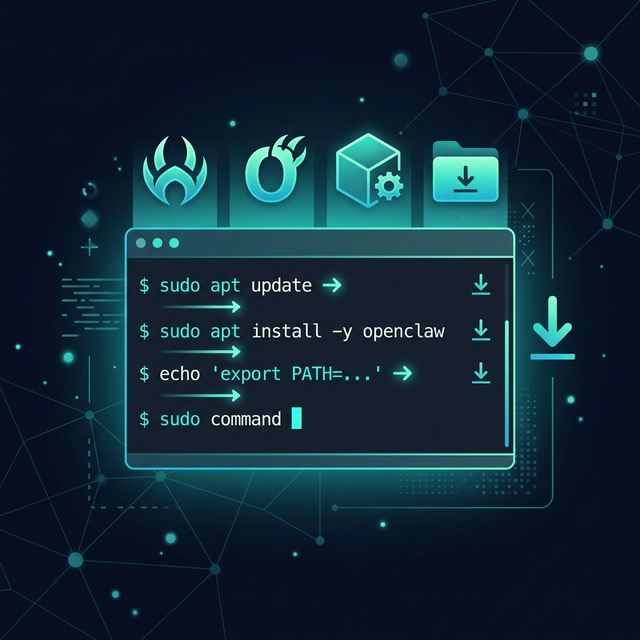
- Install — one command on macOS, Linux, or WSL2 (full guide)
- Connect a channel — Telegram is the fastest (20-minute setup guide); WhatsApp and Discord work too
- Pick a model — reuse a subscription you have, add an API key, or run local models
- Harden it — pairing approval, sandboxing, and API-key caps (checklist)
- Extend — add a few vetted skills for what you actually do weekly
FAQ
Is OpenClaw free? Yes — MIT-licensed open source. You pay only for model usage (or nothing, with subscriptions/local models) and optional hosting.
Is OpenClaw safe? It ships with sane security defaults (message pairing, untrusted-input handling), and 2.0 added a major security overhaul. Safety ultimately depends on your configuration — follow our hardening checklist.
What hardware does OpenClaw need? Very little for itself (it's a light Node.js app): any modern Mac or Linux machine, or a $6/month VPS. Local models are the hardware-hungry part, and those are optional.
Which models can OpenClaw use? Hosted providers (OpenAI, Anthropic, and aggregators) and local runtimes like Ollama. Setup auto-detects what you already have.
Related Articles
OpenClaw Security & Deployment Brief
Get the weekly OpenClaw Security & Deployment Brief — malicious skill alerts, CVE breakdowns, cost optimization tips.